
What is an Operational Data Store?
Operational Data Store (ODS) is a critical component in any data management system, serving as a temporary storage area for the most current and frequently used data. It acts as a bridge between the transactional systems, where the data is first created, and the data warehouse, where it is analyzed and used for strategic decision-making. In this blog, we’ll explore the importance of an Operational Data Store (ODS), its benefits, and its use cases.
What is an Operational Data Store (ODS)?
An Operational Data Store (ODS) is a central database that collects data from multiple systems and offers a singular location for storing different types of information. ODSs help decision-makers to take advantage of time-sensitive opportunities and make data-informed decisions while business operations are taking place because the information is continuously updated.
ODS is a database designed to support the operational needs of an organization. It provides a centralized and real-time repository for operational data used in day-to-day business activities. The ODS is often used as a source for data integration and data warehousing and can play a crucial role in helping organizations make data-driven decisions.
How do Operational Data Stores work?
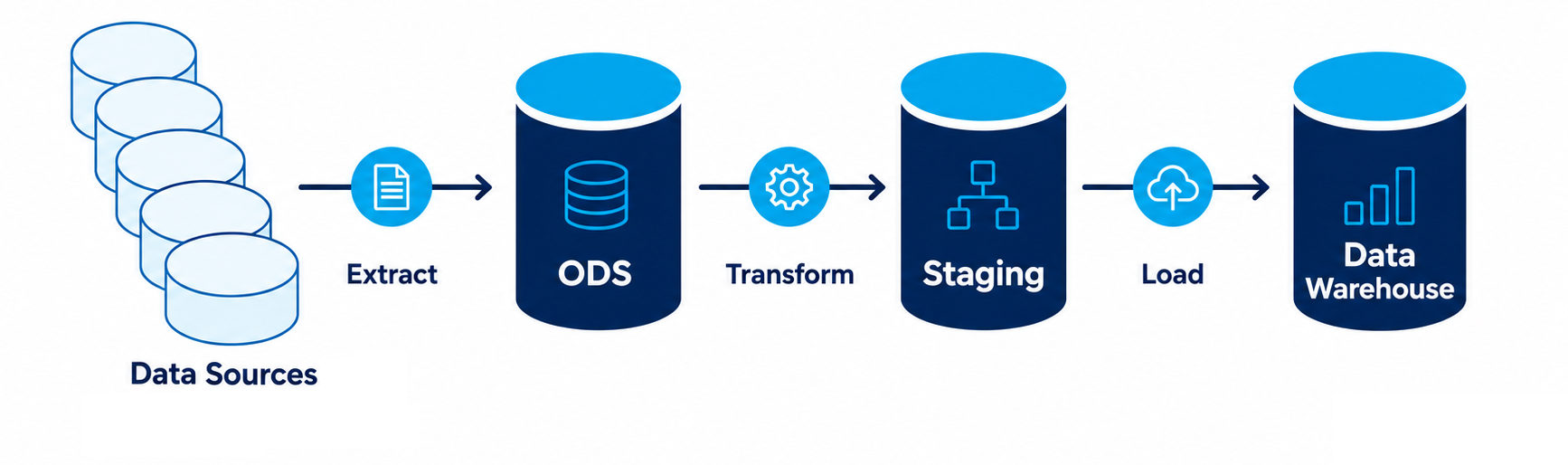
Operational Data Store vs. Data Warehouse: What’s the Difference?
The ODS is different from a data warehouse, which is designed to support analytical and business intelligence activities. A data warehouse typically contains data that has been extracted, transformed, and loaded (ETL) from various sources, whereas the ODS stores data in real time as it is generated by the organization’s various systems. The data in the ODS is typically raw, detailed, and unaggregated, making it more suitable for operational reporting and real-time decision-making.
Use Cases of ODS
- Sales and Marketing: ODS can be used to track sales data and customer information in real-time, allowing organizations to make informed decisions on marketing strategies and customer engagement.
- Financial Management: ODS can be used to integrate financial data from various sources, providing real-time financial information and insights for decision-making.
- Supply Chain Management: ODS can be used to integrate data from multiple sources, such as inventory and shipping data, to provide real-time visibility into supply chain operations.
- Healthcare: ODS can be used to integrate patient data from various sources, providing real-time access to patient information for clinical decision-making.
Benefits of an Operational Data Store (ODS)
- Accessing data, on time, can increase business performance by up to 21%. This is what makes operational data stores a compelling opportunity.
- Real-time Data Access & Enable Queries on Real-Time Data : The ODS provides real-time access to the latest operational data, allowing organizations to make decisions based on the most up-to-date information.
- Enable queries on real-time data: Querying data from multiple systems in real-time makes it easier to complete time-sensitive tasks such as providing support to a customer for a recently placed order.
- Improved Data Integration: An ODS can help organizations integrate data from multiple systems and sources, reducing the complexity and manual effort involved in managing data integration.
- Increased Data Accuracy: By providing a centralized repository for operational data, the ODS can improve data accuracy by reducing the risk of data inconsistencies and errors.
- Better Data Governance: An ODS can help organizations improve data governance by providing a single source of truth for operational data. This can help ensure data quality, security, and compliance.
- Increased Performance: ODS is designed to handle high volumes of incoming data, ensuring fast and efficient data processing.
Considerations When Implementing an ODS
- Data Volume and Velocity: The ODS must be able to handle the volume and velocity of the organization’s operational data.
- Data Quality: Data quality is critical for the success of an ODS, so organizations must ensure that data is accurate, complete, and consistent.
- Performance: The ODS must be designed to provide fast and reliable access to operational data, especially for real-time reporting and decision-making.
- Scalability: As the organization grows, the ODS must be able to scale to accommodate the increasing volume of operational data.
In conclusion, Operational Data Stores should be a component of any modern organization’s data stack because, according to the evidence in this article, they serve as a central database system for handling data from various sources and converting it into a single format using a series of ETL operations. Decision-making is subsequently simplified by making it simpler to analyze current info. As a result, it is clear that an organization’s success is influenced by both how it manages its data and the systems it uses to do so.
An Operational Data Store can provide organizations with real-time access to operational data, improved data integration, increased data accuracy, and better data governance. However, organizations must carefully consider the volume and velocity of their operational data, data quality, performance, and scalability when implementing an ODS.
To seek how DiLytics can help you with operational data stores, reach out to us at insights@dilytics.com
Data-Driven Organizations Are 3x More Likely to Achieve Better Business Outcomes
DiLytics helps organizations modernize analytics, improve decision-making, and turn complex data into a competitive advantage.