
Accelerate Logistics Intelligence with AI-Powered Analytics and Real-Time Visibility
Key Challenges Facing Modern Logistics and Supply Chain Operations
Logistics organizations manage vast volumes of operational, fleet, shipment, and warehouse data, yet often lack real-time visibility across the supply chain. Disconnected systems and delayed insights make it difficult to optimize costs, improve delivery performance, and respond quickly to disruptions.
Limited End-to-End Shipment Visibility
Limited End-to-End Shipment Visibility
Inefficient Route and Fleet Management
Inefficient Route and Fleet Management
Supply Chain Disruptions and Delays
Supply Chain Disruptions and Delays
Warehouse and Inventory Inefficiencies
Warehouse and Inventory Inefficiencies
Key Challenges Facing Modern Logistics and Supply Chain Operations
Limited End-to-End Shipment Visibility
Limited End-to-End Shipment Visibility
Inefficient Route and Fleet Management
Inefficient Route and Fleet Management
Supply Chain Disruptions and Delays
Supply Chain Disruptions and Delays
Warehouse and Inventory Inefficiencies
Warehouse and Inventory Inefficiencies
End-to-End Data and Analytics Solutions for Logistics Enterprises
From operational reporting to predictive intelligence, we deliver scalable analytics solutions that modernize logistics operations and improve end-to-end supply chain visibility.
- Demand & Booking Analytics
- Customer & Contract Analytics
- Fleet & Asset Utilization Analytics
- Inventory & Asset Availability Analytics
- Transportation & Movement Analytics
- Depot, Warehouse & Hub Operations Analytics
- Maintenance & Reliability Analytics
- Order Fulfillment & Logistics Execution Analytics
- Asset Lifecycle Analytics
- Operational Profitability Analytics
- Financial Analytics
- Planning & Budgeting Analytics
- Human Resources Analytics
- Sales Performance Management Analytics
- Procurement Analytics
- Supply Chain Execution Analytics
- Analytics Strategy & Roadmap
- Analytics Health Check/Audit
- Self Service Analytics
- Data Warehouse & ETL Implementation
- Custom Analytics Development
- Pre-built Analytics Solutions Implementation
- Analytics Managed Services
- Demand & Booking Analytics
- Customer & Contract Analytics
- Fleet & Asset Utilization Analytics
- Inventory & Asset Availability Analytics
- Transportation & Movement Analytics
- Depot, Warehouse & Hub Operations Analytics
- Maintenance & Reliability Analytics
- Order Fulfillment & Logistics Execution Analytics
- Asset Lifecycle Analytics
- Operational Profitability Analytics
- Financial Analytics
- Planning & Budgeting Analytics
- Human Resources Analytics
- Sales Performance Management Analytics
- Procurement Analytics
- Supply Chain Execution Analytics
- Analytics Strategy & Roadmap
- Analytics Health Check/Audit
- Self Service Analytics
- Data Warehouse & ETL Implementation
- Custom Analytics Development
- Pre-built Analytics Solutions Implementation
- Analytics Managed Services
Reduce Transportation Costs by Up to 25% with Real-Time Insights
Leverage AI-powered analytics to optimize logistics operations, reduce costs, and improve delivery performance with real-time visibility.
Value Delivered Through Logistics Analytics Transformation
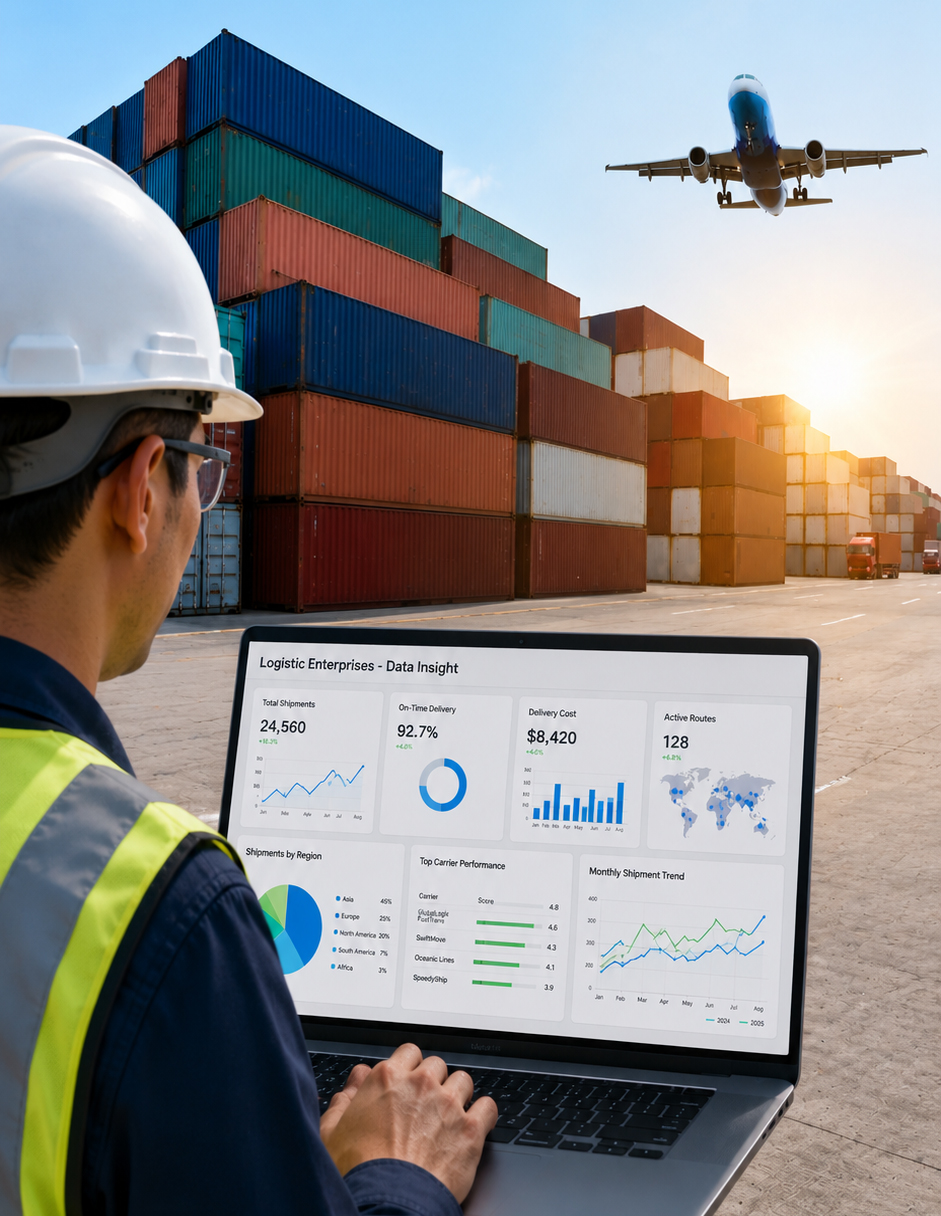
AI-powered analytics enables logistics enterprises to improve visibility, optimize operations, reduce costs, and enhance customer satisfaction through real-time and predictive insights.
Optimized Transportation and Fleet Efficiency
Improve route planning, fleet utilization, and fuel efficiency to reduce operational costs and delays.
Improved Delivery Performance (OTIF)
Enhance on-time, in-full delivery rates through better tracking, planning, and exception management.
Reduced Logistics and Operational Costs
Identify cost inefficiencies across transportation, warehousing, and procurement to drive savings.
Faster Exception Detection and Resolution
Detect shipment delays and disruptions early to enable proactive issue resolution.
Predictive Demand and Capacity Planning
Forecast demand and resource needs accurately to improve planning and reduce overcapacity or shortages.
Enhanced Warehouse Productivity
Streamline inventory movement, order fulfillment, and warehouse operations for higher efficiency.
Driving Operational Excellence in Logistics with Data and AI
Standardized Reporting for Logistics Performance Visibility
Delivered standardized logistics reporting across fleet, utilization, and disposal operations, enabling better container tracking and decision-making.
Standardized Reporting for Logistics Performance Visibility
Delivered standardized logistics reporting across fleet, utilization, and disposal operations, enabling better container tracking and decision-making.
Thought Leadership in Logistics Data and Operational Intelligence

Improved Inventory Accuracy Through Analytics

Transportation & Logistic Analytics Beyond Fleet Management

Guide to Performing the Perfect Sales Data Analysis
Ready to Transform Your Logistics Operations with AI Analytics?
Discover how connected intelligence can help you optimize supply chains and drive measurable business outcomes.
Frequently Asked Questions
How can analytics improve logistics and supply chain operations?
Analytics provides real-time visibility into shipments, inventory, and transportation performance, helping organizations optimize operations, reduce costs, and improve delivery efficiency.
How does analytics improve warehouse and inventory management?
Analytics provides visibility into inventory movement, warehouse performance, and fulfillment operations, helping improve accuracy and operational efficiency.
How does real-time visibility benefit logistics organizations?
Real-time visibility enables teams to proactively monitor shipments, identify disruptions early, and make faster operational decisions to improve delivery performance.
Can analytics help reduce transportation and operational costs?
Yes, analytics helps optimize routes, improve fleet utilization, reduce fuel consumption, and identify cost-saving opportunities across logistics operations.
How does predictive analytics support supply chain planning?
Predictive analytics helps forecast demand, shipment volumes, and operational risks, enabling better planning, resource allocation, and capacity management.
What systems can be integrated into a logistics analytics platform?
Logistics analytics platforms can integrate data from ERP, TMS, WMS, fleet management, procurement, and third-party logistics systems for unified insights.