
Want A Thriving Business? Focus On Predictive Analytics
Predictive Analytics for Businesses: Organizations all over the world have started to depend mostly on the 2.5 quintillion bytes of data humans produce every day to better understand their customers, identify behavioral patterns, and make effective and wise moves over the last decade.
As the technology used to gather and analyze data has continued to progress, these firms have updated their data-related practices to go along with it. Data analysts can now learn more than just how people used to act in the past. Instead, they can use data to think about what might happen in the future.
Predictive analytics is a new way to use data analysis that has worked well in a wide range of industries. Read on to learn more about predictive analytics, the importance of predictive analytics, and how it works, starting with what is predictive analytics.
Predictive analytics
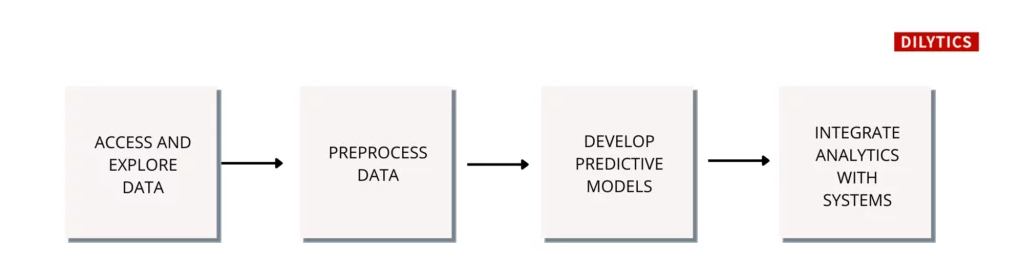
Predictive analytics is the process of using data to estimate future trends and events. It makes predictions about prospective circumstances based on historical data to assist in strategic decision-making. The forecasts could be for the near future, like predicting that a piece of equipment will break down later that day, or for the long term, like predicting how much money your organization will make in the coming years. Machine-learning techniques are used to do predictive analysis. Historical data is utilized to create predictions about the future.
The importance of predictive analytics
The use of predictive analytics by enterprises is aimed at addressing difficulties and identifying new opportunities. The following are some examples of popular use case scenarios that you may encounter:
Fraud detection
Using a combination of analytics & machine learning techniques, these approaches may help discover patterns and prevent illicit conduct. As cybersecurity becomes more important, high-performance behavioral analytics looks at all network activity in real-time to look for patterns that could be signs of fraud, zero-day vulnerabilities, or advanced persistent attacks.
Improving operations
Predictive models are used by many businesses to forecast inventories and manage resources. Airlines use predictive analytics to set ticket pricing, improve customer service, reduce flight cancellations and avoid ticket overbookings. To optimize occupancy and income, hotels aim to forecast the number of visitors for any particular night. Predictive analytics improves the efficiency of enterprises.
Optimization of marketing campaigns
Predictive analytics is used to predict client reactions and purchases, as well as cross-sell possibilities. Predictive models can help businesses attract, retain, and grow their most profitable customers.
Risk reduction
Credit scores, a well-known example of predictive analytics, are used to determine a buyer’s chance of defaulting on a transaction. In the financial world, a credit score is a number produced using a prediction model that takes into consideration all relevant information regarding a person’s creditworthiness. Insurance claims and collections are two other risk-related apps that may be found on the market.
Predictive analytics is beneficial to a variety of industries like
Pharmaceutical
Predictive analytics has become an increasingly important solution in the pharmaceutical industry. The application of predictive analytics allows drug companies to make more informed decisions about their products and R&D strategies. Predictive analytics can help identify potential risks and opportunities for a product before it is even developed, allowing for better decision-making about pricing, marketing, and other strategic initiatives.
Also Read: Resolving marketing challenges of an asset leasing industry with data analytics
One of the most important uses of predictive analytics in pharmaceuticals is predicting the likely success or failure of a new drug candidate. By understanding how patients respond to different versions of a drug candidate, companies can make better choices about which ones to pursue further development on. Predictive models can also be used to predict how customers will use a new product and which features will be most popular. This information can help companies plan for future sales and marketing efforts.
Retail
Predictive analytics may assist retailers to map out a customer’s journey and provide vital insight into how prospects and leads progress through the sales and marketing funnel to become customers. This shows where and how businesses may need to make adjustments in this funnel in order to improve future customer journeys.
Finance and Banking
With so much data and money on the line, the financial industry has long relied on predictive analytics to detect and prevent fraud, maximize cross-sell and up-sell opportunities, assess credit risk, and retain valuable customers. Commonwealth Bank uses analytics to figure out how likely it is that a transaction will be a fraud before it has even been approved – in less than 40 milliseconds.
Health insurance
Aside from identifying claims fraud, the health insurance sector is working to identify people who are most at risk for chronic illness and determine the appropriate therapies. A huge pharmaceutical benefits company uses analytics to find patients who aren’t following their doctors’ advice, which can save them anywhere from $1,500 to $9,000 per person.
Semiconductor
The global market for big data analytics in semiconductors and electronics was assessed at $17,134.70 million in 2020 and is expected to grow at a CAGR of 9.7% to $42,103.80 million by 2030. Big data analytics is a process through which businesses study vast amounts of data in order to extract relevant information like market trends, customer preferences, hidden patterns, and other undiscovered truths that might help them make better decisions. Furthermore, a number of businesses are turning to big data analytics that boost profits, develop analytical abilities, raise and control yield, and improve risk management. Big data analytics also aids firms in better comprehending the information required for problem identification, wafer testing, predictive maintenance, and yield management.
The government and the public sector
Predictive analytics is used to improve cybersecurity. Governments have had an important role in the development of computer technology. For decades, the US Census Bureau has been studying data to better understand population changes. Governments and many other private companies are already using predictive analytics to enhance services and performance, identify and prevent fraud, and get a better understanding of customer behavior.
To know more about predictive analytics contact us at insights@dilytics.com.
Data-Driven Organizations Are 3x More Likely to Achieve Better Business Outcomes
DiLytics helps organizations modernize analytics, improve decision-making, and turn complex data into a competitive advantage.